



Lakmé Fashion Week 2025 trend report: Menswear, sustainability, and everyday luxury
Lakmé Fashion Week 2025 trend report: Menswear, sustainability, and everyday luxury
In its 25th year, the Lakmé Fashion Week 2025, in partnership with the Fashion Design Council of India (FDCI) was less about spectacle and more about sensibility. Theatrics took a backseat to thoughtfulness, as designers re-evaluated what fashion means in a climate of change — climatic, cultural, and consumer-driven. There was no singular aesthetic dominating the five-day showcase, but rather a quiet recalibration of technique, proportion, and intent.
From seasoned couturiers to new-gen labels, the collections spoke of dualities — tradition meeting tech, comfort meeting structure, and art meeting wearability. Instead of chasing virality, designers leaned into craft. Surface embellishment was purposeful. Colour palettes were restrained. Gender norms blurred. Heritage, once treated with nostalgia, was now layered with a future-facing lens.
Refined maximalism
While the West continues to orbit around quiet luxury, Indian designers at Lakmé Fashion Week offered a counterpoint — maximalism, but measured. It was a season of drama laced with discipline; ornamentation wielded with intent.
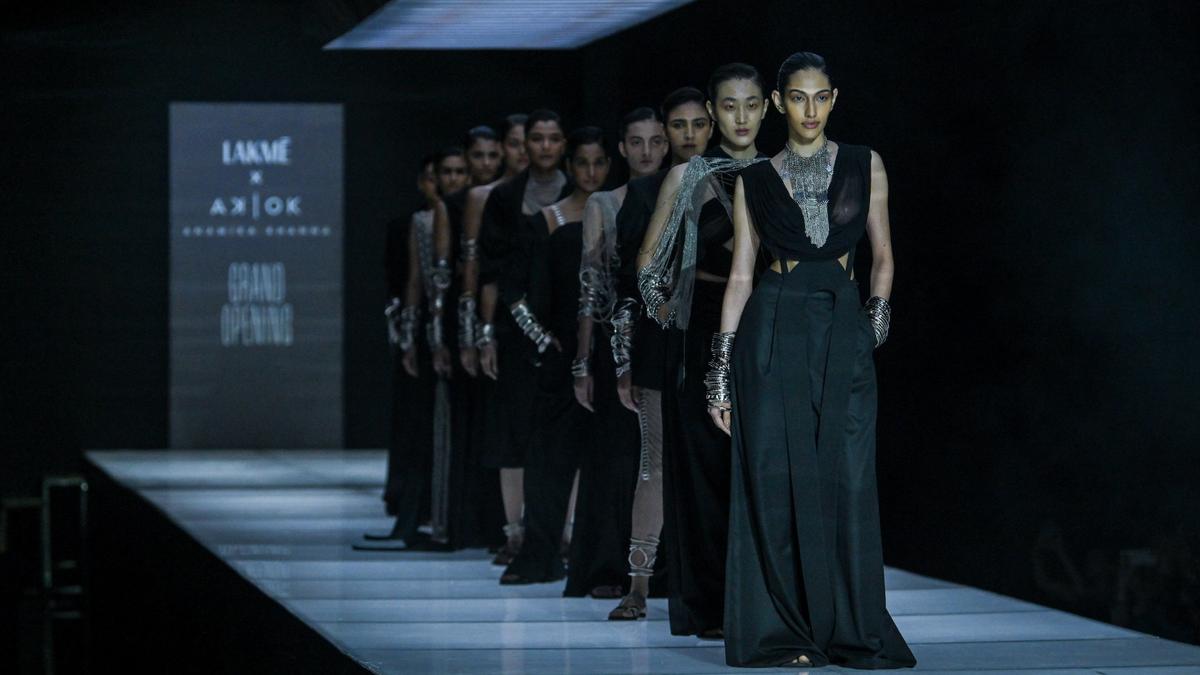
Anamika Khanna’s Silver Collar collection set the tone. Deconstructed tailoring met opulent embroidery — structured bralettes, high-waisted metallic trousers, and chainmail flourishes. It was less about flamboyance, and more about confidence laced with craft.
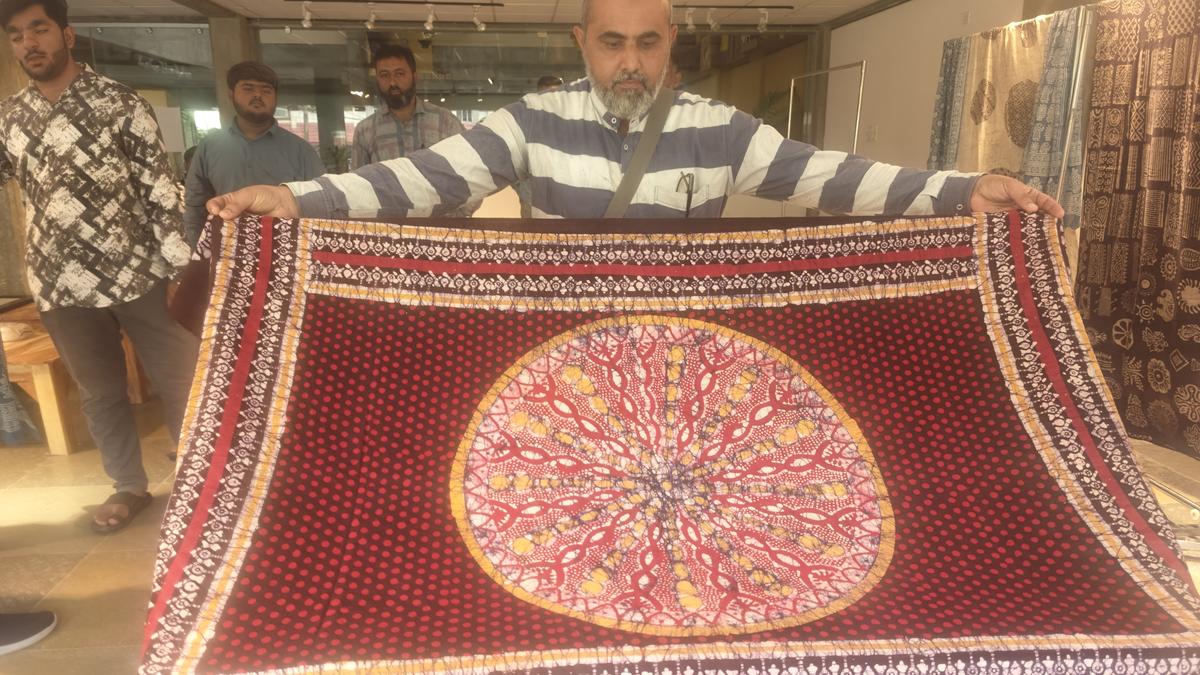
Rahul Mishra’s The Silk Route, under his prêt label AFEW, drew from flora, folklore, and textile legacies. The collection wove Nature into couture, presenting hand-embroidered ecosystems that rippled with detail but never tipped into excess. The intricacy was intense, but the message — sustainability and quiet wonder — came through loud and clear. The collection highlighted visual exchanges across borders, mirrored in the parallel evolution of India’s bandhani and Japan’s shibori. A quiet ode to craft, culture and shared histories.
Amit Aggarwal took maximalism in a futuristic direction. His collaboration with tech brand Nothing resulted in a line where Banarasi brocade collided with industrial polymers — ballooning trousers, corseted blouses, and sharp tailoring gave tradition a glossy, sci-fi sheen. The palette was monochrome, but the craftsmanship spoke volumes.
Falguni Shane Peacock, known for high-octane glamour, showed restraint — relatively speaking. Their collection delivered sculptural jackets, crystal-studded corsets and feathered gowns, but with a controlled silhouette and tonal palette that leaned urban rather than theatrical. There was still shimmer and drama, but anchored in a kind of futuristic femininity.
Reimagining masculinity
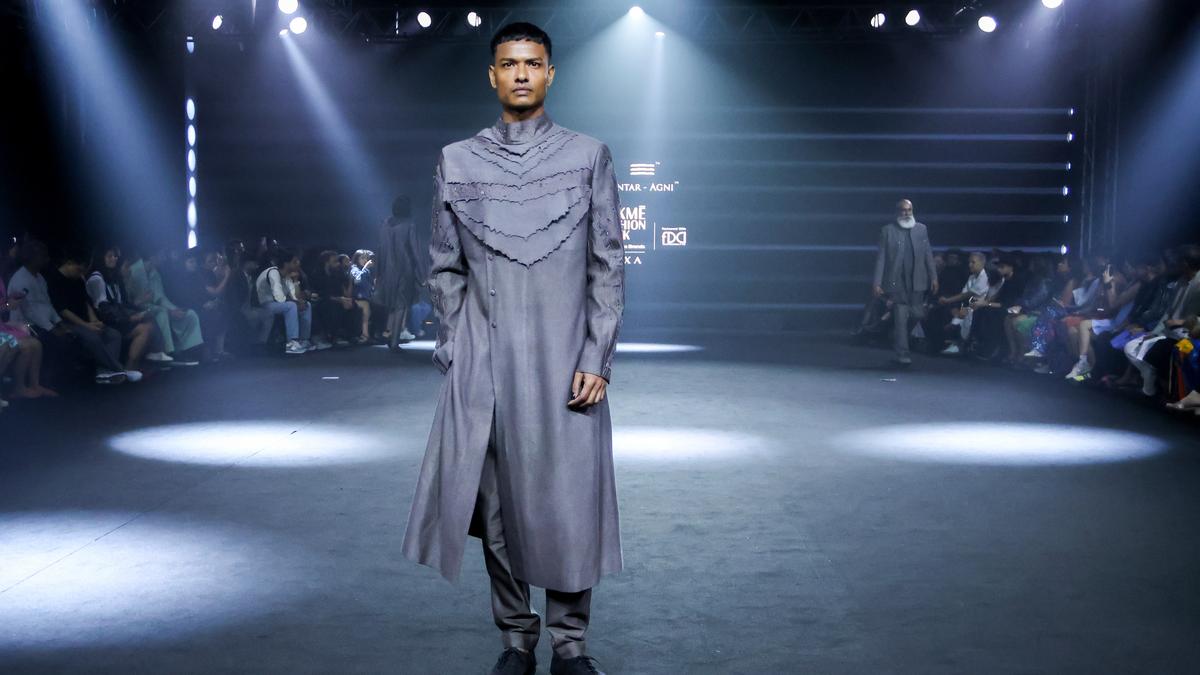
This year, a quieter menswear revolution took shape — one that moved beyond functional staples to embrace emotional nuance, historical references, and craft-led expression. The GenNext designers moved away from minimalism without tipping into costume, offering garments that were expressive, yet wearable.
Abhishek Shinde, under his label Abhichiq, offered a Sicilian summer through Ciao — a collection of handwoven, block-printed separates layered with embroidery and nostalgic tailoring. Oversized blazers, striped shackets, and Bermudas hinted at ease but were grounded in artisanal polish. His approach balanced playfulness with longevity, creating resort wear with structure.
Yash Patil, of That Antiquepiece, drew from archival photographs of the Rana queens of Nepal, blending moulded silhouettes, corsetry and ballroom drama. Though presented as womenswear, the construction-heavy garments (a visual treat of rich detailing with braids, jewels and sheer textiles) shared a meticulous, sculptural quality often aligned with contemporary menswear’s move towards androgyny and theatricality.
Somya Lochan’s label Quarter took a more introspective route. Her collection The Dichotomy of Loss was born from a social experiment on grief, translated into garments made from Tanchoi silk and Himroo brocade. Embellished with handmade brass buttons and beaded embroidery, the pieces — boxy jackets, flared trousers, and padded coats — were gender-fluid in structure and emotional in tone.
Together, these designers challenged the binary of menswear as either utilitarian or ostentatious. Their work suggested a middle ground: introspective, referential, and unafraid to be emotionally resonant.
The rise of active-leisure
This season, designers brought clarity to a shifting category: clothes that sit comfortably between function, movement, and leisurely indulgence.
Namrata Joshipura continued her exploration of performance-driven fashion with a collection anchored in engineered fabrics like R|Elan Kooltex and GreenGold. Bodysuits, cropped jackets, singlets, and shorts were cut for movement but styled for the street — mirroring the global mood where activewear is no longer confined to the gym. Breathable textiles and recycled fibres underlined the emphasis on wearability and conscious design.
Shivan & Narresh leaned into art-as-leisure with a capsule inspired by French painter-sculptor Fernand Léger. Their resort wear — swim trunks, ponchos, relaxed robes and knit coordinates — tapped into a holiday state of mind, but with deliberate cuts and saturated prints. Textural summer knits and hand-finished accessories created an easy tension between craft and escapism, offering men and women equal space in a wardrobe designed for transit, sea, or poolside pause.
Saaksha & Kinni, through their Myrah collection for Lakmé’s Sun Stopper show, used Gujarat’s Adalaj Stepwell as a springboard. Their silhouettes comprising layered kaftans, printed jackets, and pleated dresses balanced movement with structure. Lycra-infused swimwear sat beside breezy cottons, while sandstone tones and water-inspired blues grounded the palette in place. It was resortwear as a state of cultural storytelling, shaped by geography and intention.
Indie cool: emotion with edge
A new wave of designers leaned into a softer, more self-aware fashion — marked by slow techniques, layered storytelling, and a firm sense of identity. Less trend-chasing, more intention. Less gloss, more grit.
Anurag Gupta’s Metamorphosis captured this shift. With a palette drawn from dawn and dusk, and silhouettes that eased between structure and fluidity, the collection explored personal growth as process, not performance. Textures felt grounded, even raw, while 3D-embellished layers and tonal gradients kept things visually sharp. This was not fashion for show, but self-reflection.
Rkive City, the winner of the R|Elan Circular Design Challenge, channelled the same spirit through Reclaim The City. Their pieces comprising overlays, trousers, and shirts, built entirely from salvaged textiles, revived old workwear and rejected garments into fashion that carried memory, place and subculture. Sleeves referenced municipal uniforms; pockets nodded to everyday street life. Nothing flashy. Everything felt lived in.
New-age luxury: fashion that fits the everyday
This season, Indian luxury moved out of the drawing room and into daily life. On the Lakmé Fashion Week runway, designers redefined what it means to invest in fashion: less fantasy, more flexibility.
Shantnu & Nikhil’s Piazza Nova marked five years of their bridge-to-luxury label, S&N. The collection reflected the brand’s core idea: heritage tailoring with urban sensibility. Slim bandhgalas, printed shirts, and embroidered jackets allowed wearers to mix statement with staple. Designed for the aspirational buyer, it bridged occasion and everyday through modular pieces that lean modern but nod to tradition.
Tarun Tahiliani’s OTT Season 2 took a similar route. The focus was on fluidity — layered separates, draped gilets, and convertible silhouettes styled live on stage to highlight versatility. Traditional crafts like chikankari and Rabari embroidery were recast in contemporary forms, and archival prints reappeared in fresh palettes. The idea was simple: luxury that adapts to the wearer, not the other way around.
Together, both collections signalled a shift. Luxury was less about exclusivity, more about expression — quietly confident, wearable, and rooted in the idea of fashion as a personal tool, not just a spectacle.